Understanding Bali’s Rituals: The Meaning Behind Tri Sandhya, Purnama, Tilem & Odalan
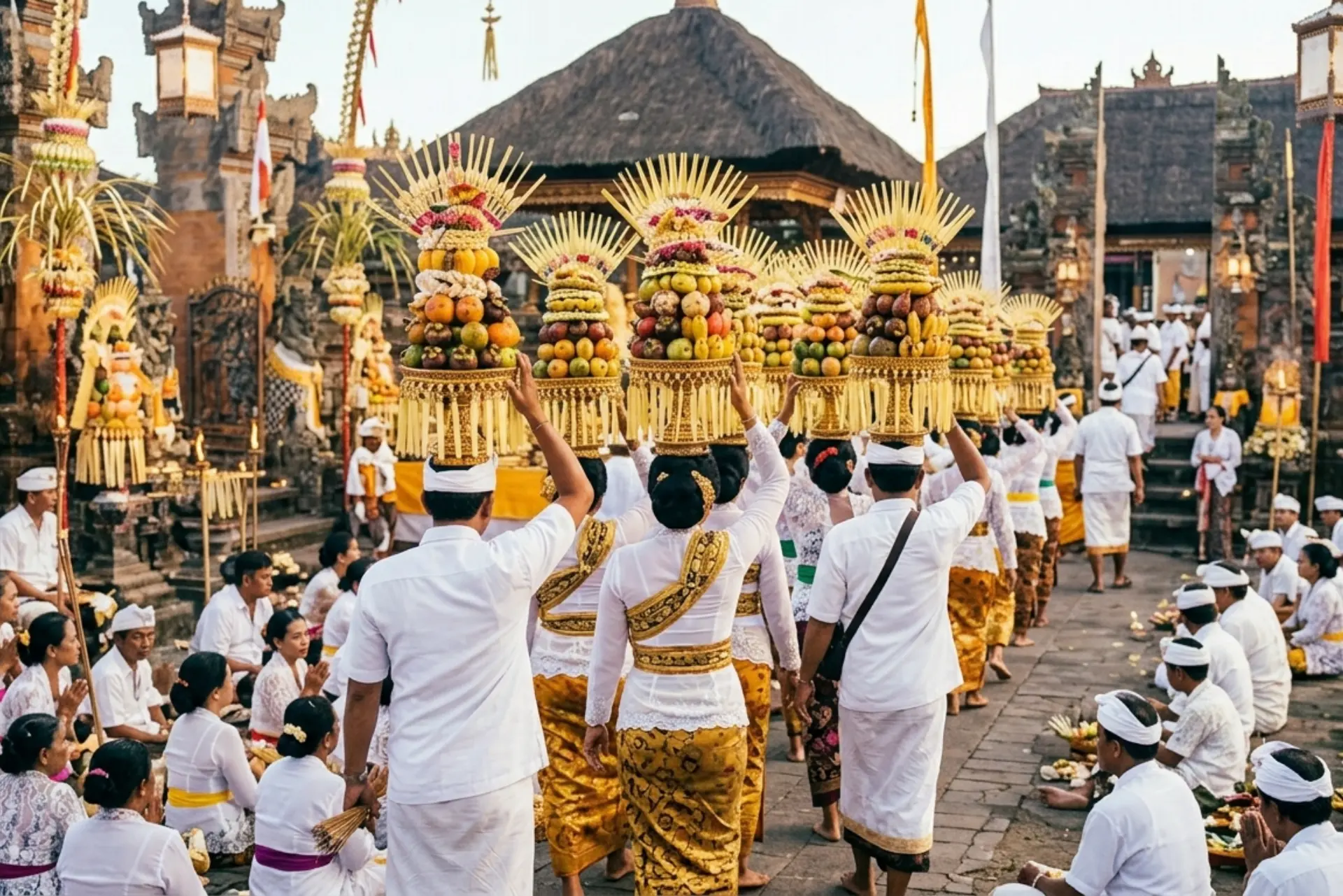
A visual introduction to Bali’s sacred rituals and their meaning in daily life.
Bali’s sacred rituals reveal a living spiritual rhythm through daily prayers, lunar ceremonies, and temple traditions that shape island life.
For many visitors, Bali’s beauty is first encountered in its landscapes — the coastline, rice terraces, and temples that define the island’s identity. Yet beyond the scenery lies another defining rhythm: a living culture where ritual and daily life remain deeply intertwined.
Across the island, moments of devotion quietly unfold each day. Guests may notice small offerings set along pathways, hear the distant sound of bells and prayer chants in the evening, or see communities in ceremonial attire making their way to temples. These are not staged experiences, but part of the genuine spiritual rhythm that shapes Balinese life.
At the heart of these traditions is the Balinese philosophy of harmony and balance — maintaining a respectful relationship among people, nature, and the spiritual world.
Tri Sandhya: Bali’s Daily Prayer Ritual
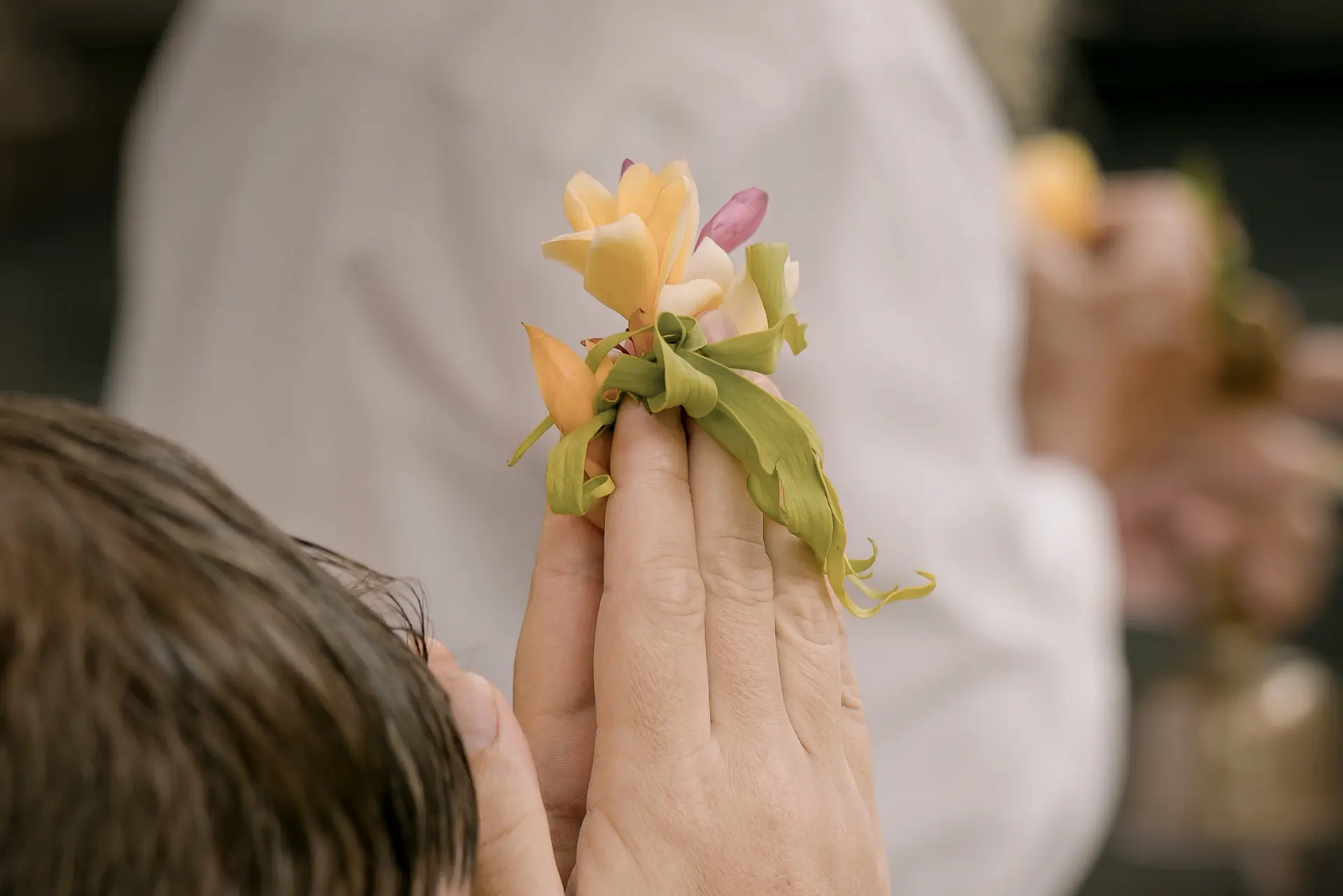
One of the most commonly practised rituals in Bali is Tri Sandhya, a daily prayer performed three times a day — typically in the morning, midday, and evening. The prayer serves as a moment of reflection, gratitude, and spiritual mindfulness amid daily activities.
For visitors staying in Bali, these traditions are often encountered through small everyday gestures — the preparation of canang sari offerings, the placement of incense near entrances, or family shrines tended throughout the day — reflecting how spirituality remains closely connected to daily life in Bali.
Rather than grand ceremonies, Tri Sandhya reflects how spirituality is naturally woven into daily Balinese life. The practice is quiet, personal, and ongoing — a reminder that devotion in Bali exists not only in temples, but within daily routines.
Purnama: The Full Moon Ceremony
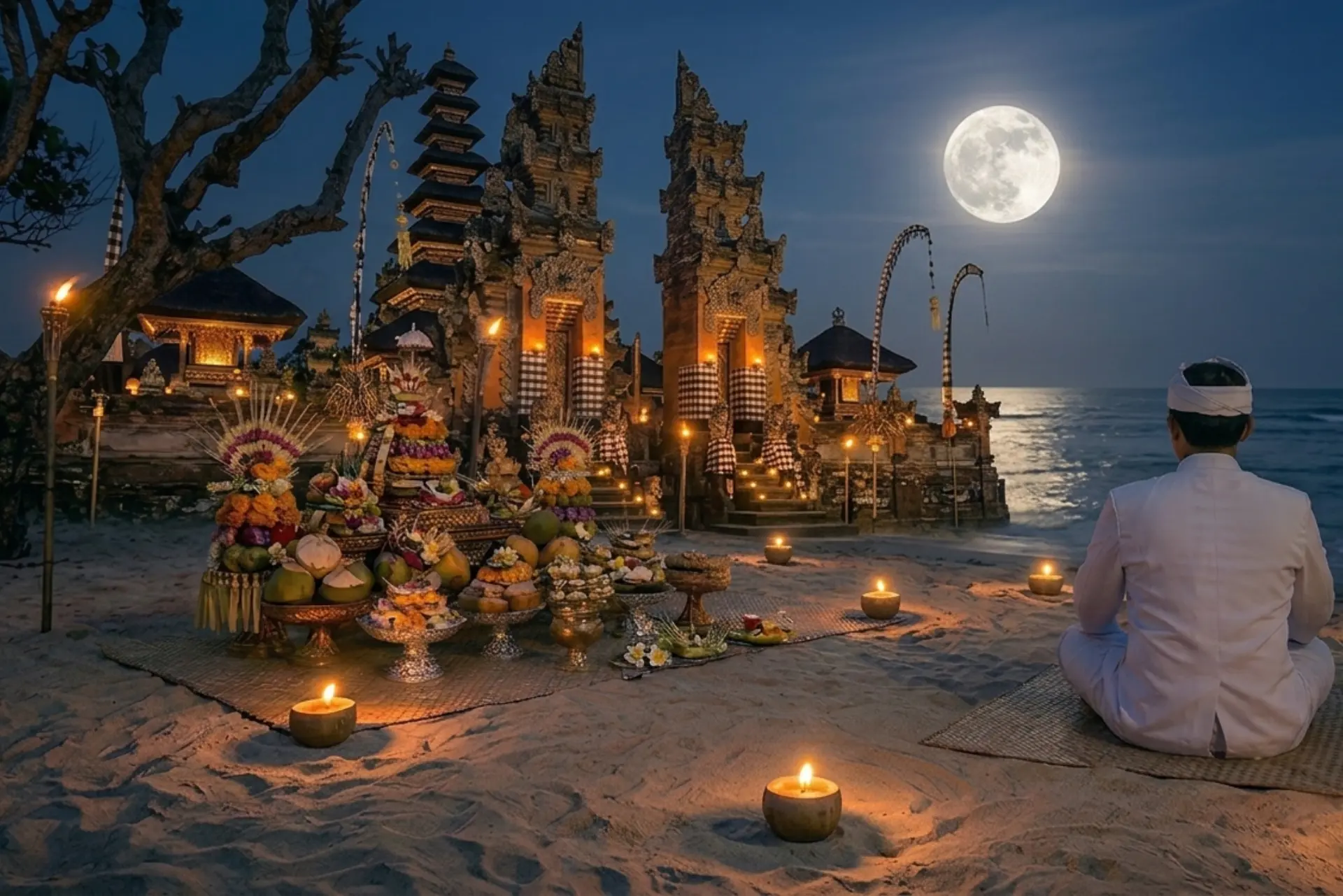
The lunar cycle plays an important role in Balinese Hindu tradition, especially during Purnama, or the full moon.
Considered a spiritually significant time, Purnama is marked by prayer, gratitude, and positive energy. Families prepare offerings, temples fill with ceremonies, and many Balinese wear traditional attire for evening prayers.
Visitors may notice communities gathering at temples in ceremonial attire, offerings being prepared throughout the day, and a quieter sense of devotion woven into the evening atmosphere. While each village and temple observes Purnama differently, the full moon remains an important spiritual moment across Bali.
Tilem: Reflection During the New Moon
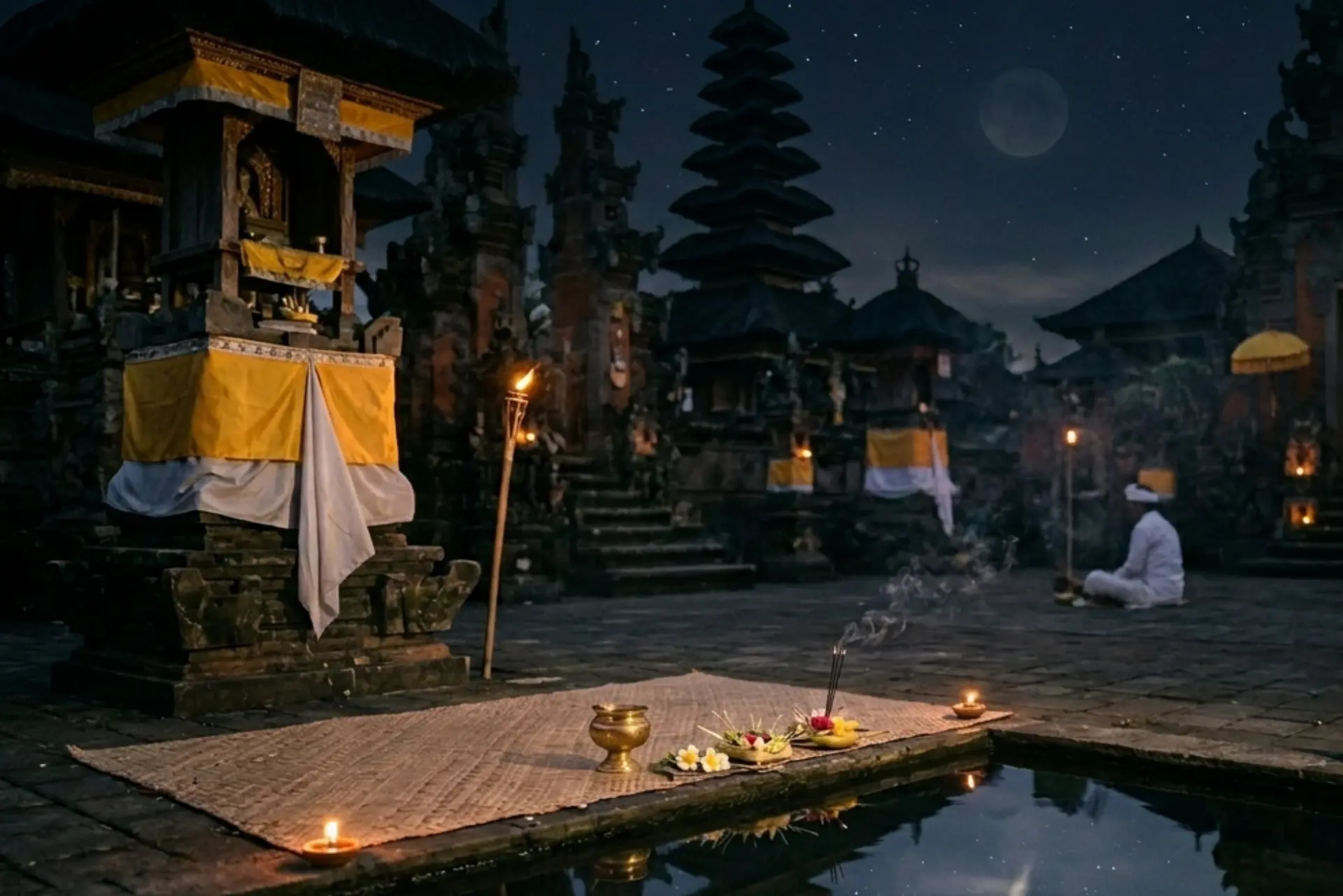
In contrast to Purnama’s festive atmosphere, Tilem marks the new moon with a quieter, more introspective tone.
Tilem is associated with reflection, spiritual cleansing, and renewal. Ceremonies continue, though the mood is more contemplative. For many Balinese, it is a meaningful time for inward reflection and prayer.
Together, Purnama and Tilem illustrate the importance of balance in Balinese philosophy — honoring both outward gratitude and inward stillness as part of life’s natural cycle.
Odalan and Pujawali: Temple Anniversary Ceremonies
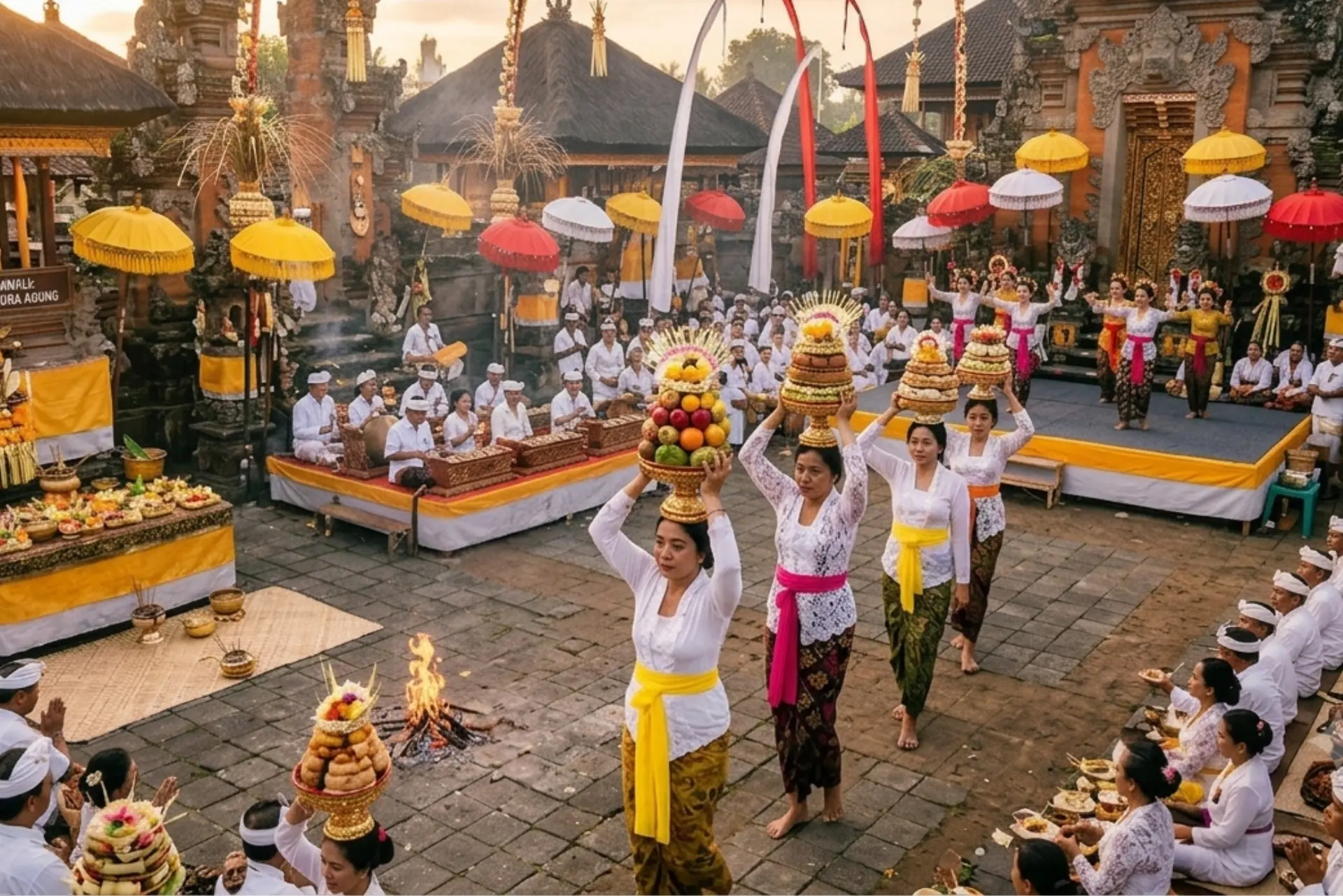
Beyond daily prayers and lunar rituals, Bali is also home to Odalan ceremonies — temple anniversaries held throughout the Balinese calendar.
Every temple across the island observes its own Odalan, with ceremonies taking place year-round in villages, family temples, and larger sacred sites. Unlike the Gregorian calendar, many Balinese ceremonies follow the Pawukon calendar, a 210-day cycle. As a result, temple anniversaries occur frequently across the island, each carrying unique traditions and community significance.
Some Odalan ceremonies are intimate local gatherings, while others feature grand processions, traditional performances, and days of preparation.
Closely connected to these ceremonies is Pujawali — acts of devotion and worship performed during temple celebrations. Families and communities gather to prepare offerings, prayers, and ceremonial decorations, continuing traditions passed down through generations.
For visitors, witnessing an Odalan ceremony can be one of the most memorable cultural experiences in Bali — not because of spectacle alone, but because of the deep sense of community, continuity, and shared devotion that surrounds it.
Experiencing Bali Respectfully
While Bali’s ceremonies are visually striking, they remain deeply sacred for local communities. Guests are encouraged to observe respectfully, dress appropriately at temple sites, and avoid interrupting ceremonies or prayers for photographs.
Often, the most meaningful way to experience Bali’s culture is through quiet observation — noticing offerings placed each morning, hearing prayer chants at sunset, or witnessing communities gather in devotion.
At Mulia Bali, guests are invited to experience not only the island’s natural beauty, but also the cultural traditions and spiritual rhythms that shape daily life across Bali.