.svg)

What You Need to Understand About the Balinese Calendar
Understanding Bali’s Unique Relationship with Time
Bali moves to a rhythm shaped by ancient calendars that guide ceremonies, daily offerings, and sacred observances. For travellers, understanding this system reveals that these moments are not interruptions, but the living heartbeat of Balinese culture.
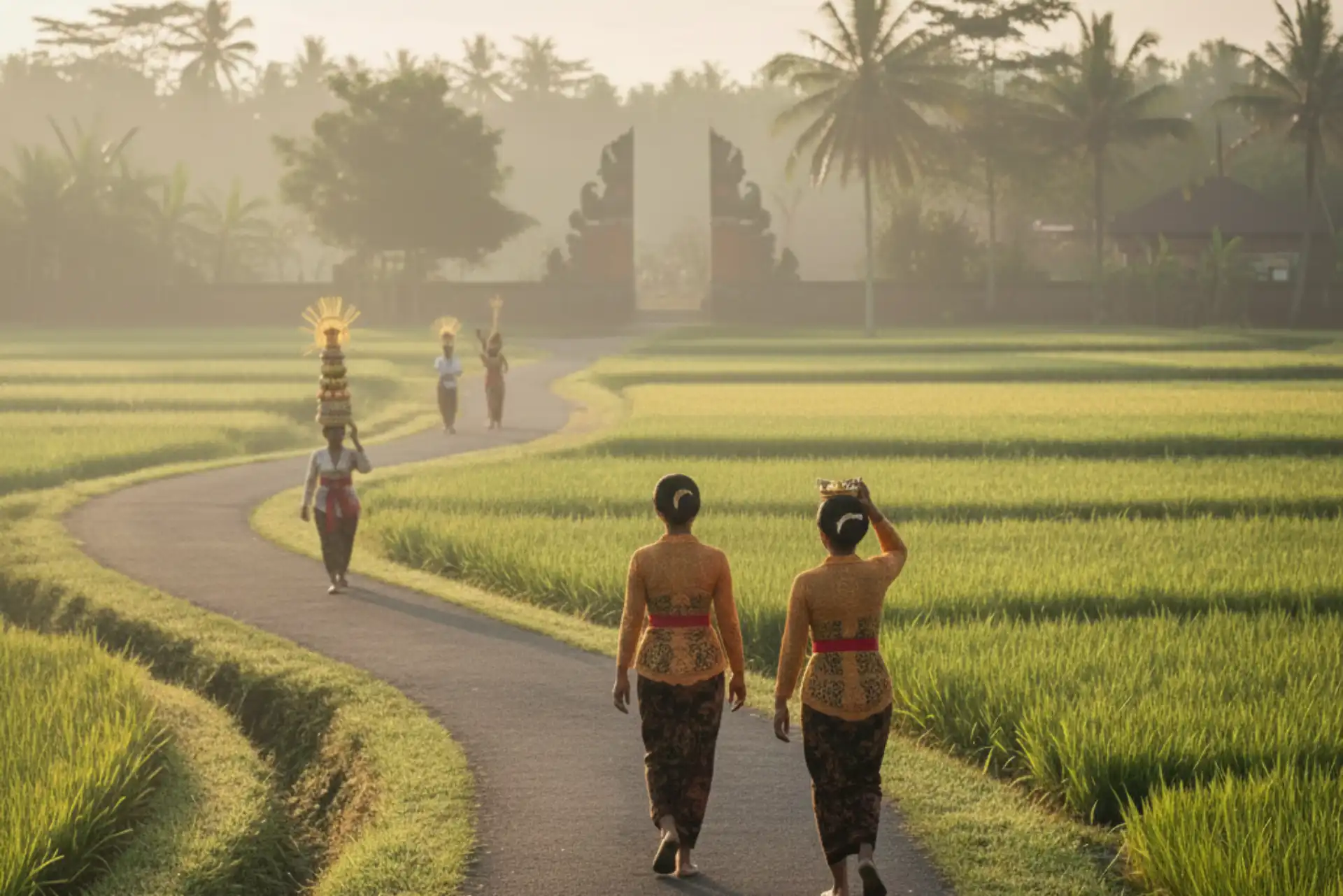
For many first-time visitors, Bali can feel as though it exists on a different timeline altogether. You may encounter a quiet procession along the road, offerings placed with care at doorways, or the distant sound of prayer drifting through the day. This is neither coincidence nor performance; it is the expression of how time is perceived and celebrated on the island.
In Bali, daily life follows not one, but several calendars. Understanding this allows travellers to appreciate that these moments are not interruptions, but the heartbeat of a living cultural tradition.
Two Calendars, One Way of Life
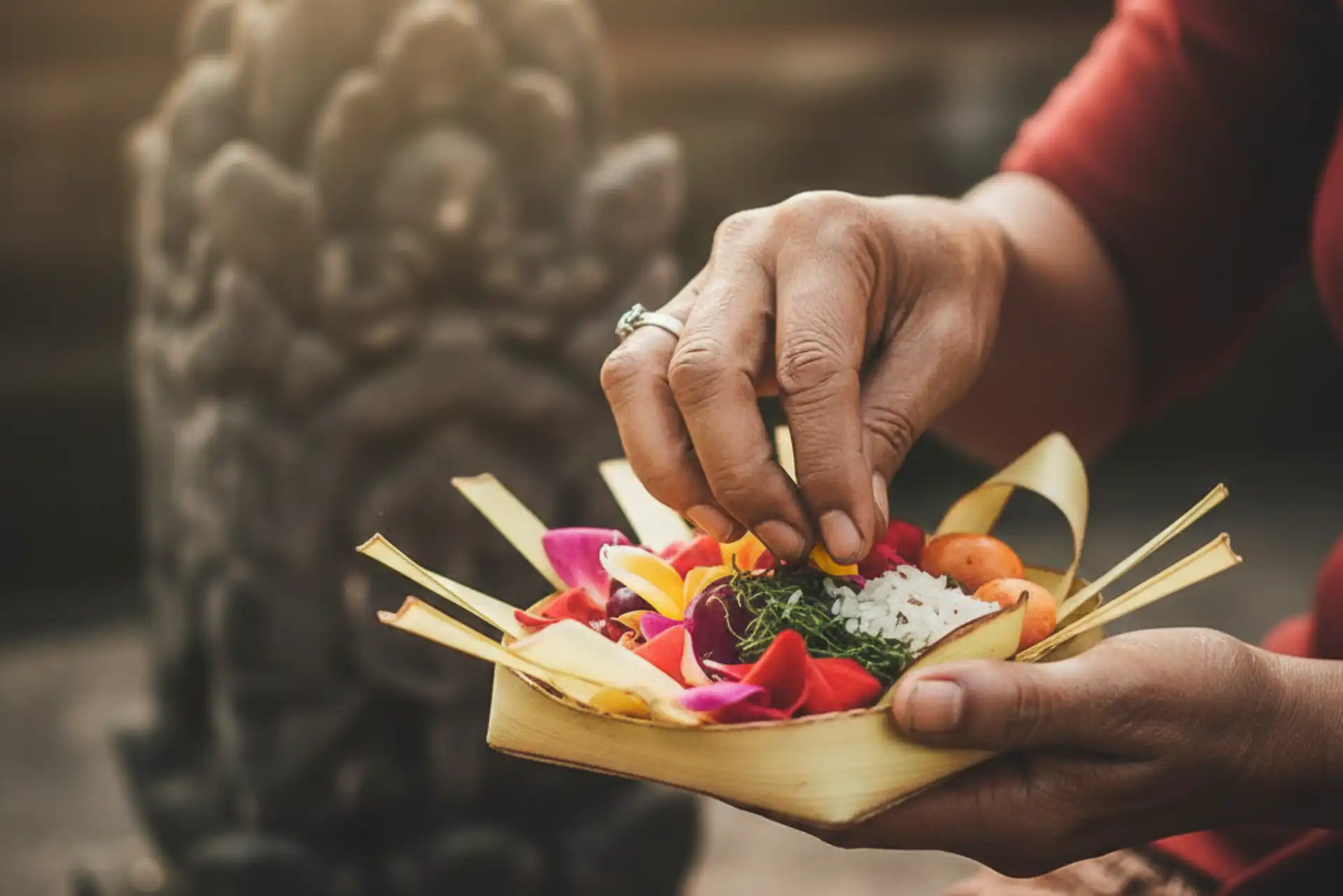
Alongside the international Gregorian calendar used for flights, schedules, and business, Balinese communities observe ancestral calendars that guide spiritual and communal life. These calendars do not measure time as a straight line from past to future; rather, time moves in elegant cycles, echoing the rhythm of the island itself.
The most commonly observed is a 210-day ritual cycle known locally as Pawukon, which determines temple anniversaries, auspicious days, and countless ceremonies. In parallel, the Saka lunar calendar guides major religious observances, including Nyepi, the revered Balinese Day of Silence.
Because these systems overlap, ceremonies are distributed throughout the year rather than concentrated into a single festive season. The repetition is intentional. Balance and harmony are maintained through regular observance, not through rarity.
Why Are Ceremonies So Frequent?
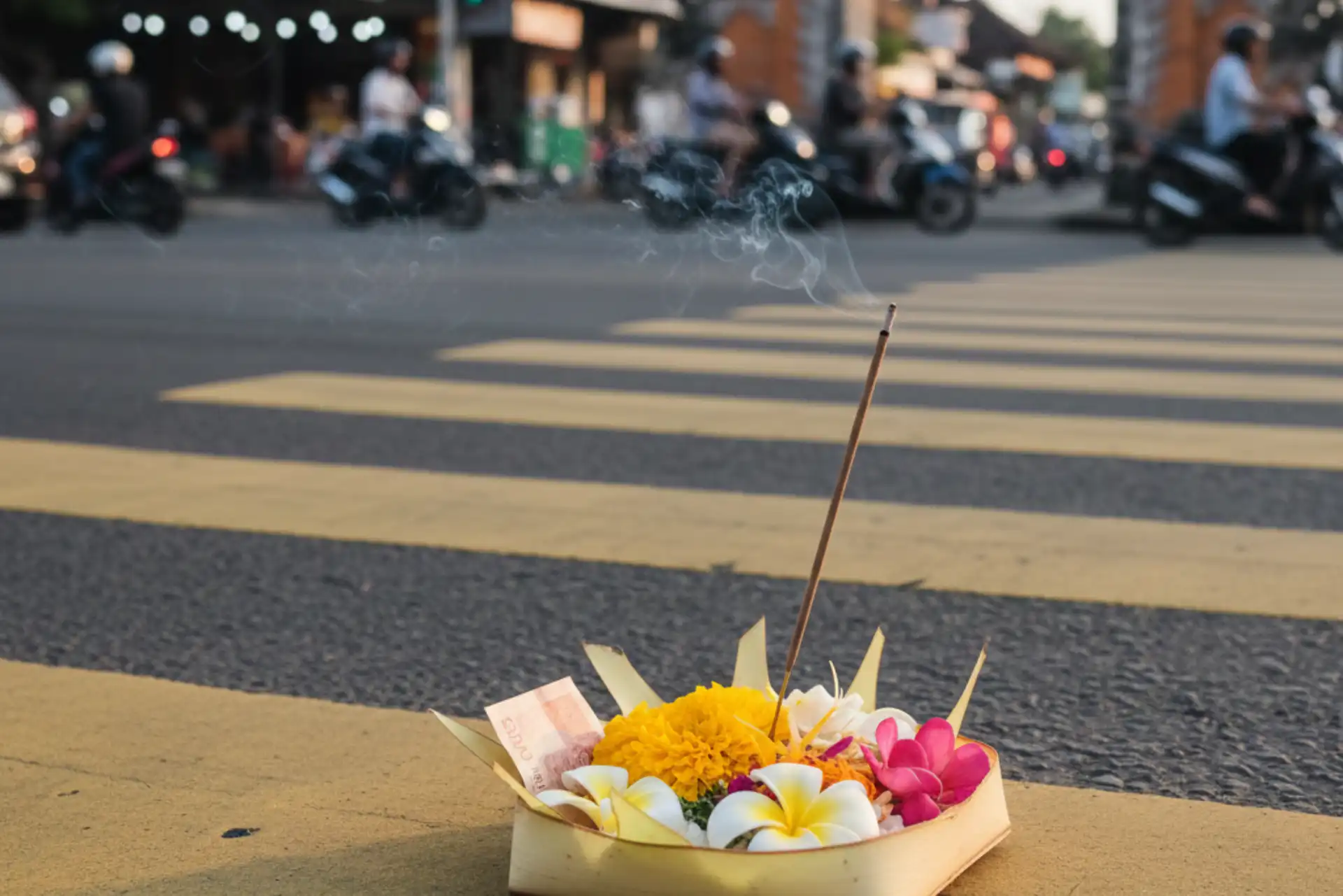
Travellers often feel that “something is always happening” in Bali. In reality, most ceremonies are intimate, local, and highly specific. A temple anniversary may involve only one village or even a single family shrine. Daily offerings are tender acts of gratitude rather than grand celebrations. Processions are graceful expressions of devotion, unfolding simply because the calendar marks the occasion as sacred.
These observances are delicately woven into daily life, lending Bali its distinctive atmosphere. What visitors witness is not an excess of ceremonies, but the visible presence of a culture that lives its rituals every day.
What This Means for Travellers
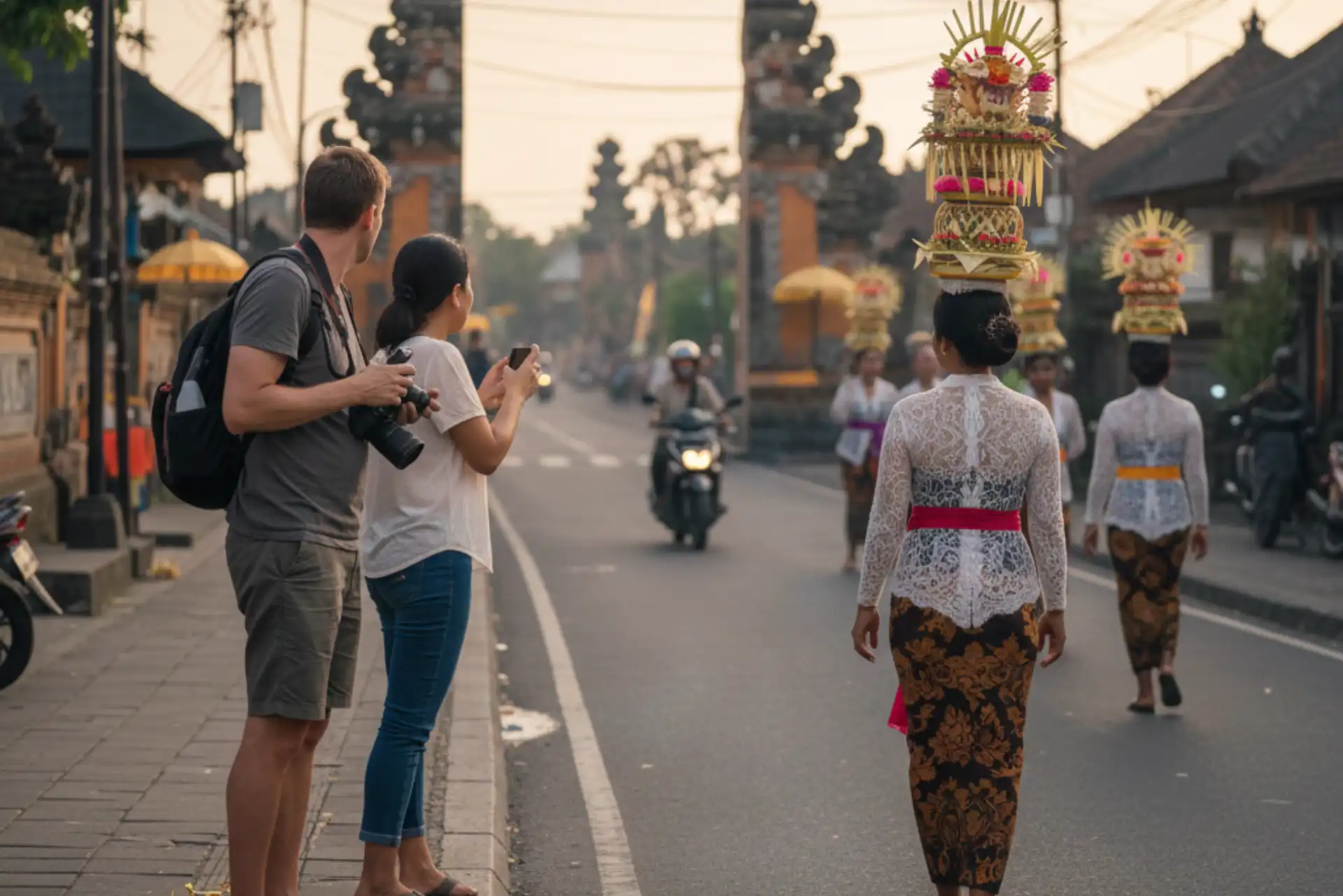
Understanding the Balinese calendar removes uncertainty and invites ease. Guests may encounter brief road closures, see people in ceremonial attire, or hear the gentle cadence of prayer, music, or chanting at unexpected times. These moments are typically brief and seamlessly managed by the community.
They are not disruptions, nor are they staged for visitors. They are gentle reminders that you have arrived in a place where spiritual life flourishes in harmony with modern hospitality.
Travellers are never expected to participate, dress ceremonially, or understand the meaning of each observance. Awareness and patience are sufficient.
Observing with Ease and Respect
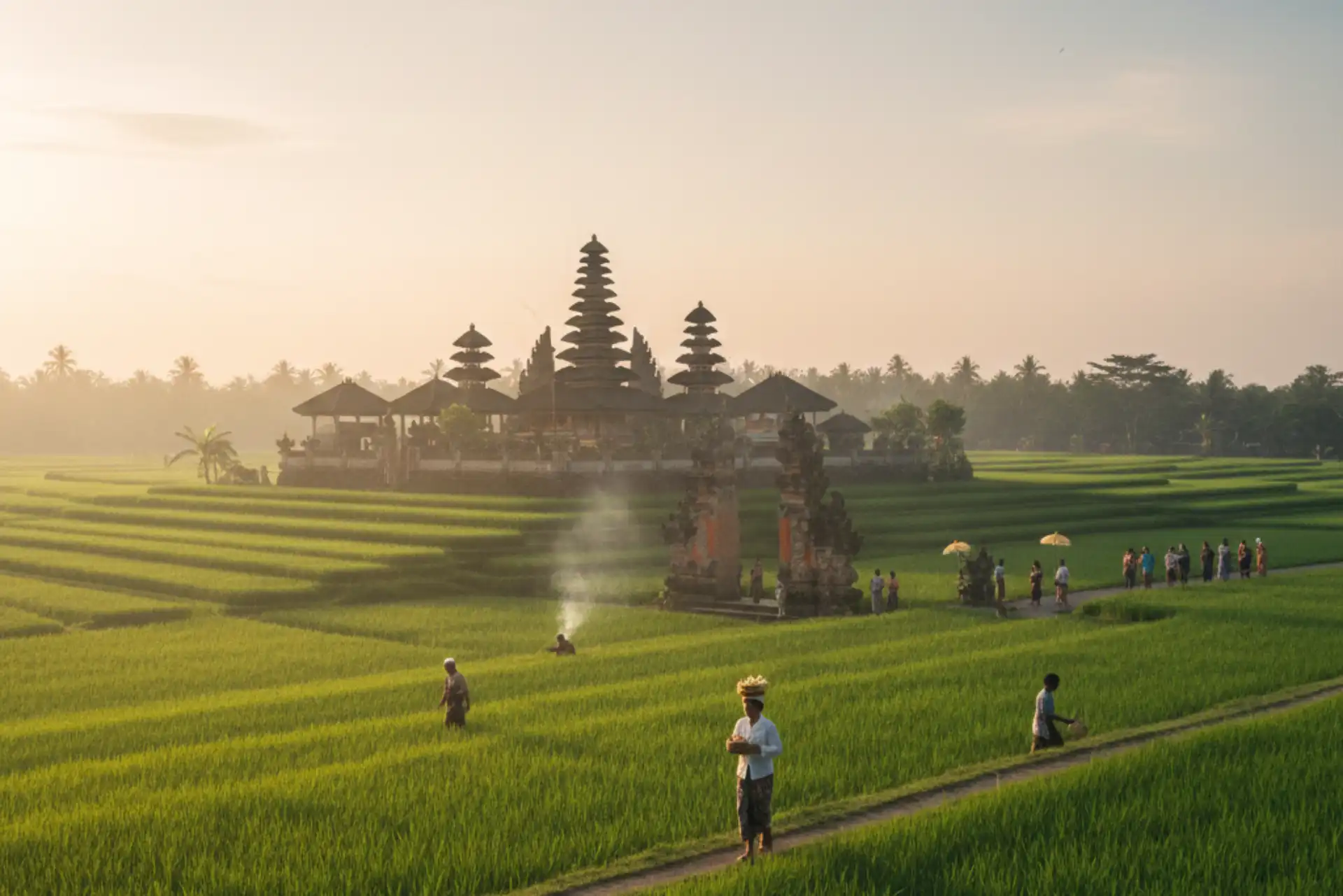
For first-time visitors, the most important thing to know is that respect is expressed through simple behaviour. Standing aside during a procession, lowering your voice near a temple, or waiting calmly for a few minutes is enough.
Photography is generally acceptable when done discreetly and from a respectful distance, especially during public ceremonies. When unsure, quiet observation is always appropriate.
There is no expectation to engage, only to acknowledge.
A Different Relationship with Time
The Balinese calendar reflects a worldview where repetition is not redundancy, but a celebration of continuity. Life here is not governed solely by deadlines, but by the exquisite balance between people, nature, and the spiritual realm.
For travellers, this rhythm often inspires a gentle shift. Days feel less hurried, and interruptions become moments of reflection. What may first seem unfamiliar soon becomes one of the most grounding and memorable aspects of a stay in Bali.
Travelling with the Rhythm
Understanding Bali’s unique sense of time requires no study—only openness. When guests move with this rhythm, rather than against it, every small moment becomes meaningful, transforming the ordinary into the extraordinary.
In this way, the Balinese calendar offers a quiet lesson. Time does not always need to be controlled or accelerated. Sometimes, it is meant to be observed.