.svg)

A Balinese Blessing Ceremony in Bali: What It Is, What to Expect, and Why It’s Worth Experiencing
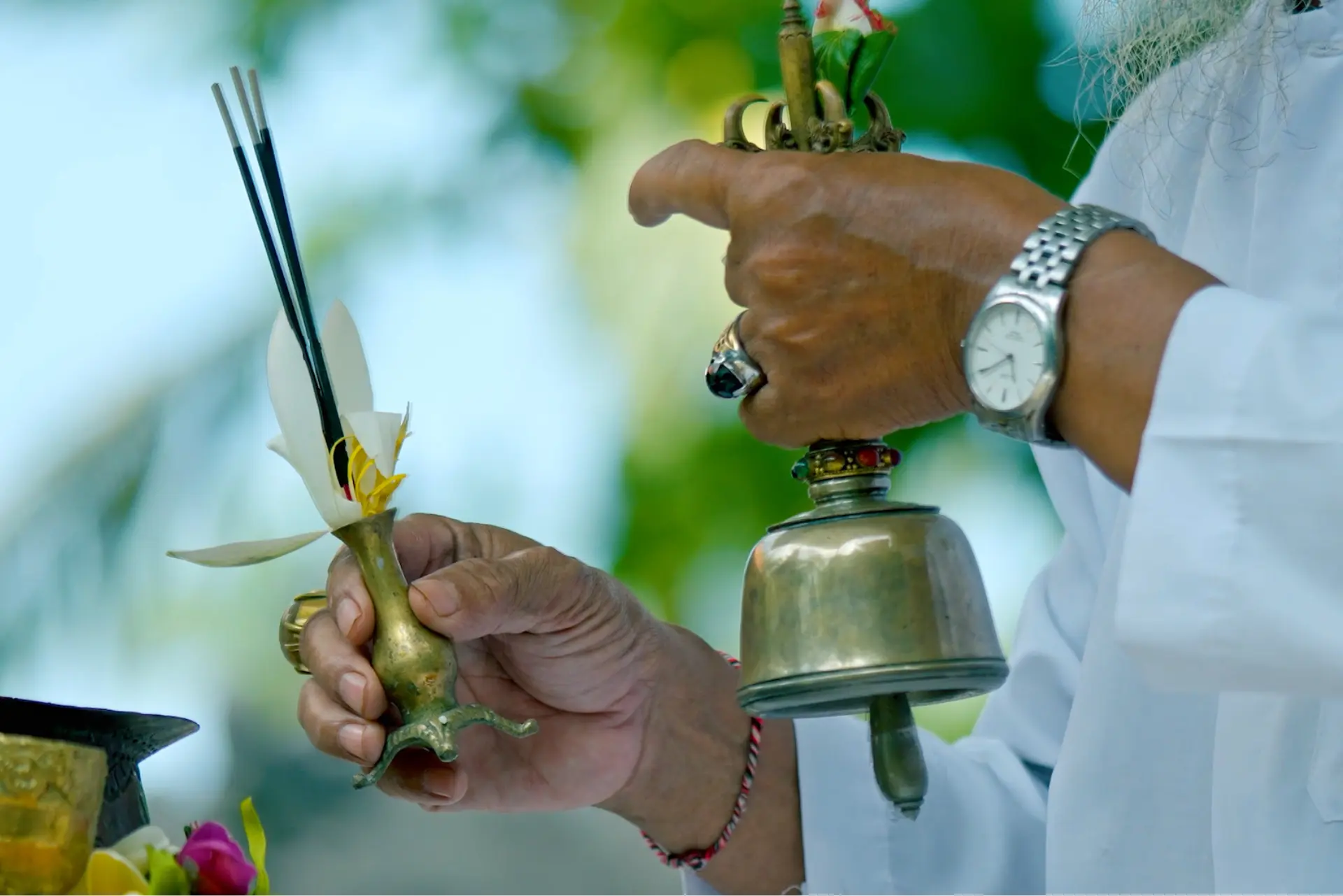
A Balinese Blessing Ceremony in Bali: What It Is & Why You Should Experience It
Experience the heart of Balinese spirituality through a guided blessing ceremony. This intimate ritual, often held in serene settings like the temple at Mulia Bali, provides a meaningful way to connect with local traditions through prayer, symbolic offerings, and holy water purification. It is an approachable yet profound cultural moment designed to restore balance and invite positive energy during your stay.
When visiting Bali, many travellers look beyond beaches and dining to understand the island’s cultural and spiritual life.
One of the most accessible ways to do this is by joining a Balinese blessing ceremony. This structured ritual, guided by a priest, offers a glimpse into how spirituality is woven into everyday Balinese life.
At Mulia Bali, this experience is thoughtfully arranged within the resort’s temple, allowing guests to participate in a setting that is both authentic and approachable.
What Is a Balinese Blessing Ceremony?
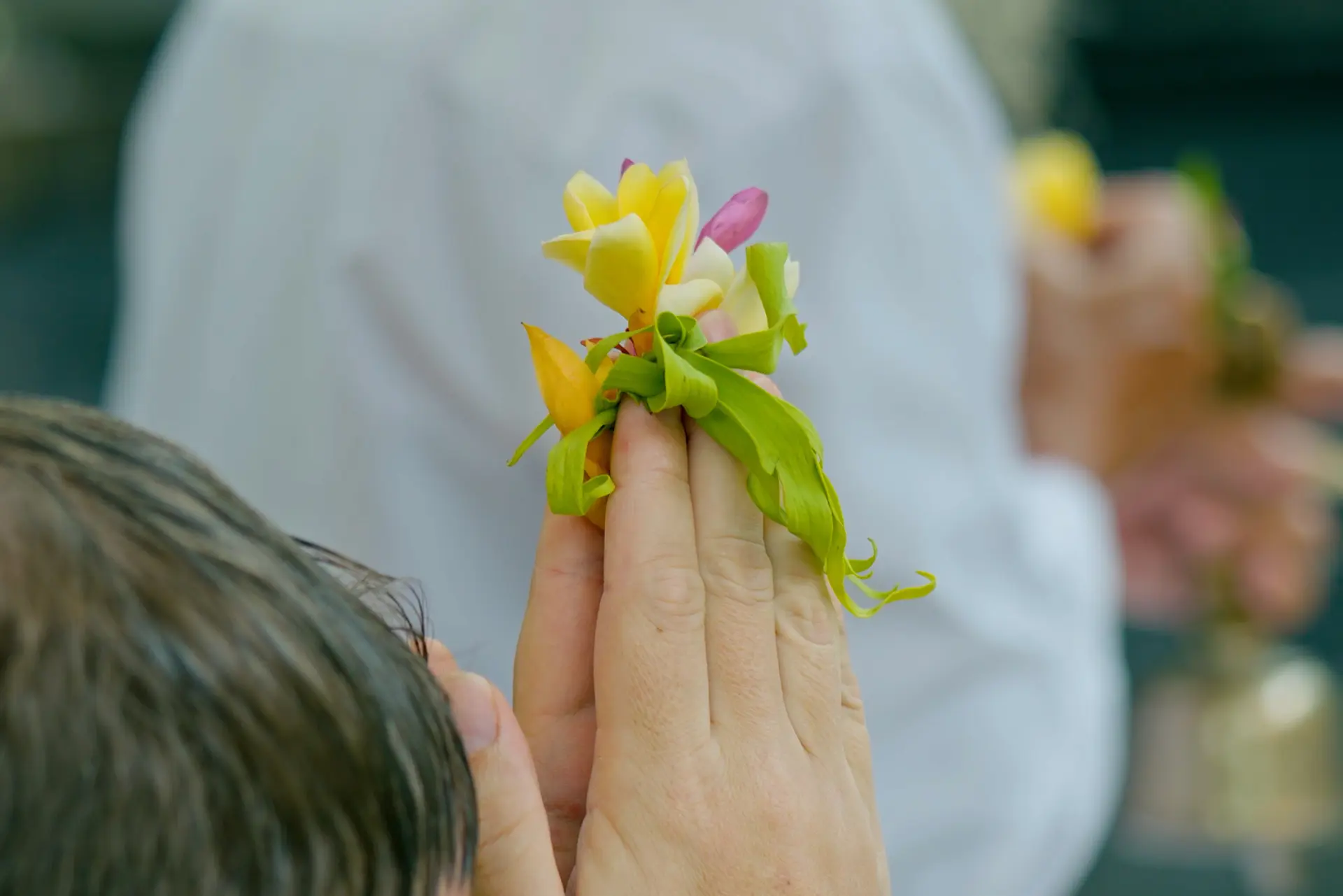
A Balinese blessing ceremony is a short ritual focused on prayer, intention, and symbolic purification.
It is not a large public ceremony and differs from full purification rituals such as Melukat. Instead, it is a more intimate experience that introduces the key elements of Balinese spiritual practice in a clear and respectful way.
The purpose is simple:
to restore balance, invite positive energy, and offer a moment of pause.
What Happens During the Ceremony?
The experience is guided step by step, making it easy to follow, even for first-time visitors.
1. Temple Preparation
Guests wear a sarong and sash, both required when entering temple grounds in Bali.
2. Offering Presentation
A small canang sari is used during the ritual. This handmade offering, created from palm leaves and flowers, represents gratitude and harmony.
3. Guided Prayer
The priest leads the ceremony through a series of chants. Guests follow simple hand gestures, so no prior knowledge is needed.
4. Blessing with Holy Water
Holy water is gently applied to the head and hands. This central moment of the ritual symbolises purification and protection.
5. Closing Moment
The ceremony ends with a brief pause, giving guests a moment to take in the experience.
Why Do Visitors Choose This Experience?
For many, Balinese ceremonies can feel unfamiliar or difficult to approach independently.
A guided blessing ceremony provides:
• Clarity — understanding what each element means
• Comfort — a structured and welcoming environment
• Connection — a chance to engage with Balinese culture in a meaningful way
It is not about performing a ritual perfectly.
It is about experiencing something different and understanding why it matters.
Where Can You Experience It?
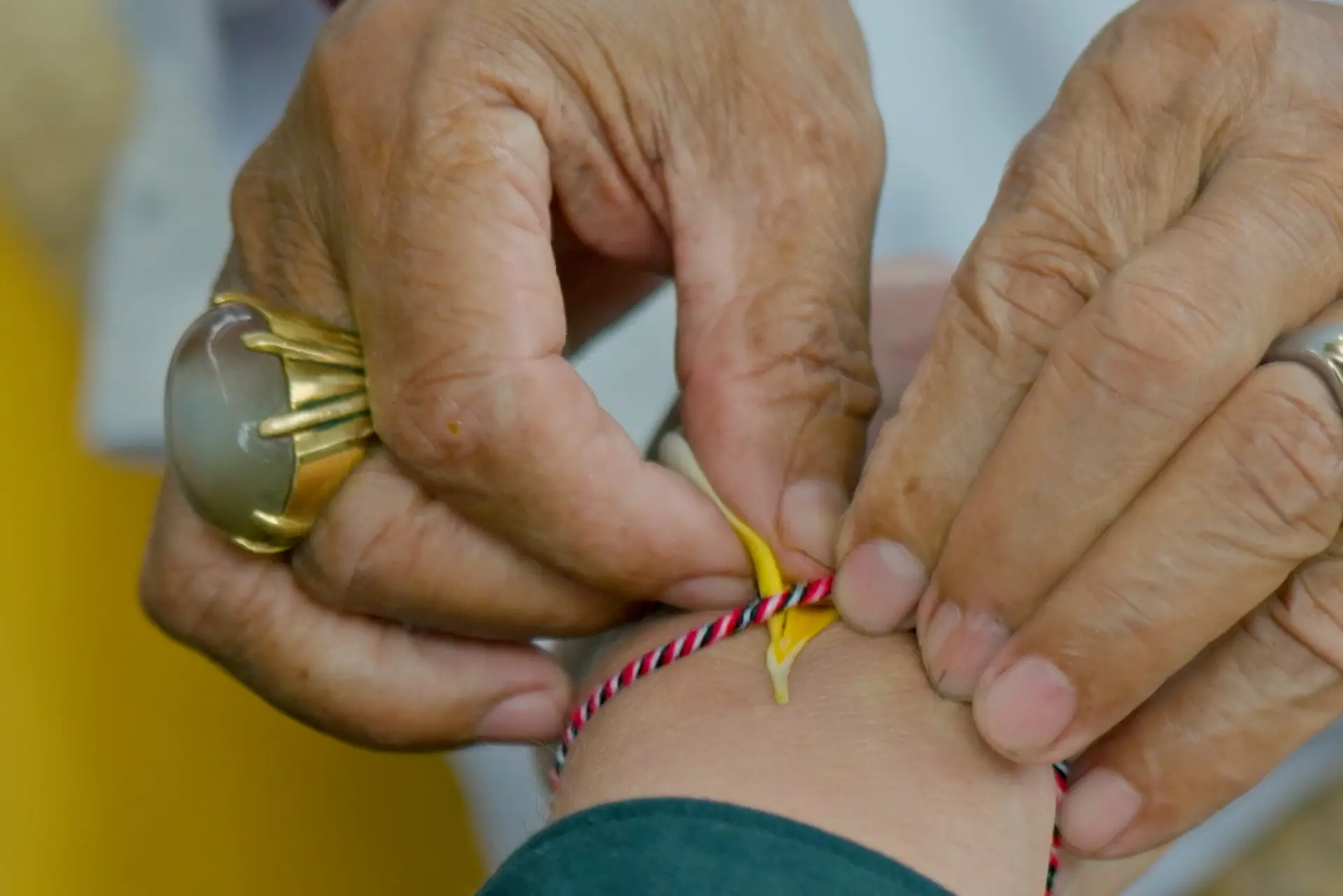
At Mulia Bali, the ceremony takes place in the resort’s temple, offering a calm, private setting.
For those interested in exploring further, nearby sites such as Geger Temple offer a more traditional, community-based environment.
A Cultural Moment Within Your Stay
Not every travel experience needs to be fast-paced or highly planned.
Sometimes, a short moment of stillness can become one of the most memorable parts of a trip.
A Balinese blessing ceremony offers exactly that.
A simple, guided introduction to a culture where ritual is part of everyday life, and where even a brief experience can leave a lasting impression.
Considering It for Your Trip?
If you are planning your stay at Mulia Bali, this is one experience worth setting aside time for.
It requires little preparation, yet offers a deeper understanding of Bali that goes beyond what you can see.
And often, that is what travellers remember most.