The Philosophy of Offerings: Why Canang Sari Appears Everywhere in Bali

The Philosophy of Canang Sari: A Daily Ritual of Gratitude in Bali
Canang Sari is one of the most visible expressions of Balinese Hindu belief, appearing quietly at doorways, temples, streets, and sacred thresholds across Bali. More than a decorative offering, it is a daily act of devotion rooted in gratitude, balance, and harmony. Prepared every day, Canang Sari reflects the philosophy of Tri Hita Karana — the balance between humans and the divine, nature, and one another. Through simple materials, symbolic colours, and humble repetition, this ritual reminds us that spiritual harmony is not reserved for ceremonies alone, but woven into everyday life.
One of the first things visitors notice in Bali is something small, yet constant.
A woven palm-leaf tray is placed at a doorway. A cluster of flowers on the temple steps. An offering set on the ground beside a wall, with incense curling into the air. Some are neat and layered. Others are simple. Some are placed high, others low. Some burn incense, some do not.
These offerings, known as Canang Sari, are not decorations in Bali.
They are a daily act of worship.
What is Canang Sari, really?
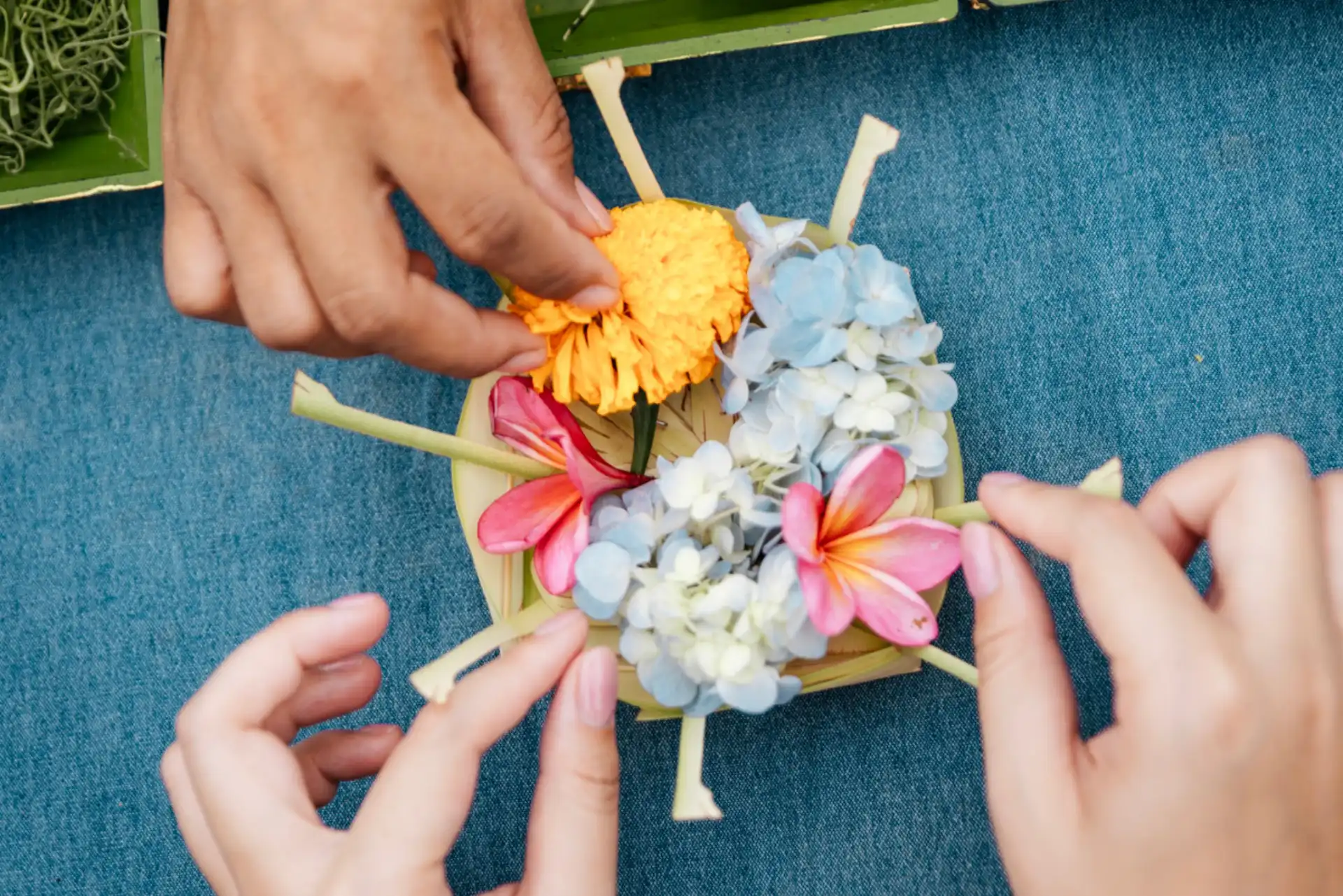
In Balinese Hindu tradition (Agama Hindu Dharma), Canang Sari is one of the most common daily offerings. The palm-leaf tray is filled with flowers and symbolic elements, presented with prayer as an expression of devotion and gratitude.
The word sari means essence. The offering is not about extravagance. It is about intention.
In practice, it is a daily gesture that says:
• Thank you for life and balance,
• May harmony be maintained,
• May the world remain aligned
Canang Sari is offered not once a year, but every day, because devotion is not reserved for special occasions.
Why do people place offerings every day in Bali?
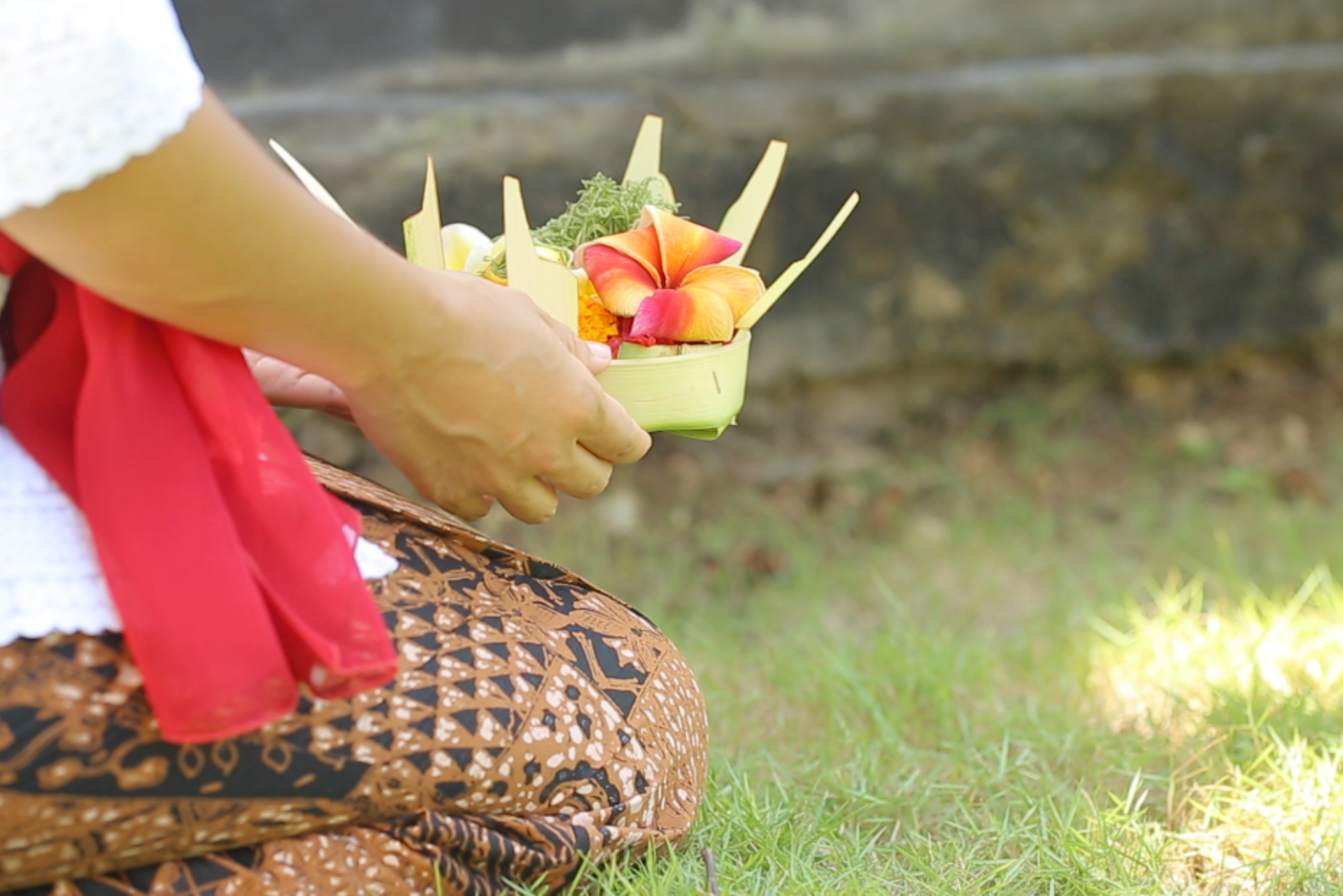
Balinese Hindu belief is shaped by harmony between:
• Humans and the divine
• Humans and nature
• Humans and one another
This is commonly understood through the philosophy of Tri Hita Karana — “three causes of wellbeing”. It teaches that a good life depends on maintaining balance between spiritual life, community life, and the natural world.
Canang Sari is one of the most visible ways this philosophy is lived.
This is why Bali can feel spiritual even outside temples. Worship is woven into the ordinary: at shop entrances, at homes, at street corners, and in daily work spaces.
The flower colours are not chosen at random
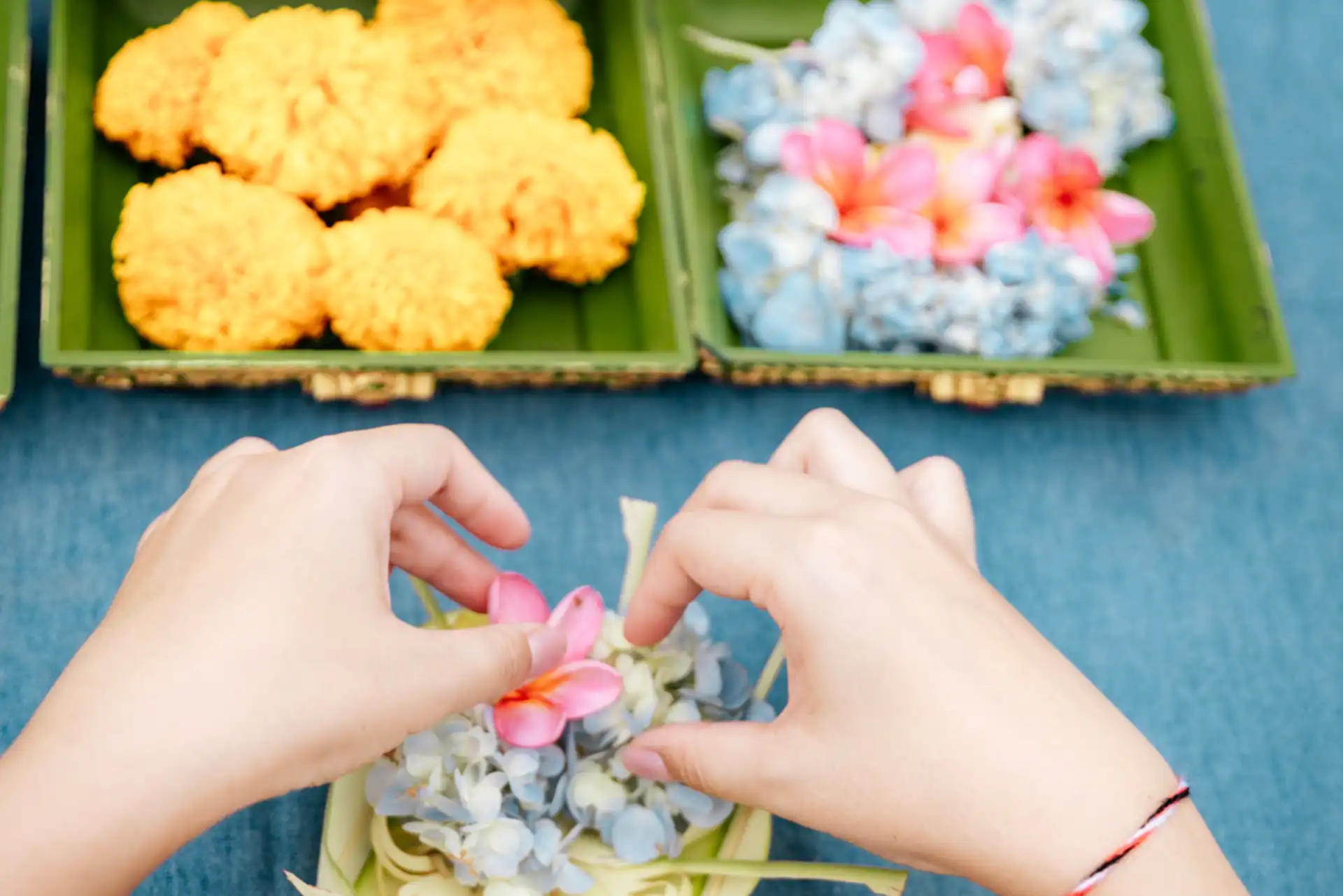
Visitors often notice the colour. That is not accidental.
In many Balinese offering traditions, the colours symbolise directions and divine forces. Practices vary slightly, but commonly:
• White represents purity and is often associated with the east
• Red represents energy and is often associated with the south
• Yellow represents blessing and is often associated with the west
• Blue/green or darker tones may appear to represent depth or protection, often linked with the north
This isn’t about turning Canang Sari into a “tourist code”. The deeper idea is that Balinese worship recognises harmony as something that must be constructed, not assumed. Colour is one way of expressing that harmony.
Beauty here is not decorative. It is devotional.
Why are some offerings placed high?
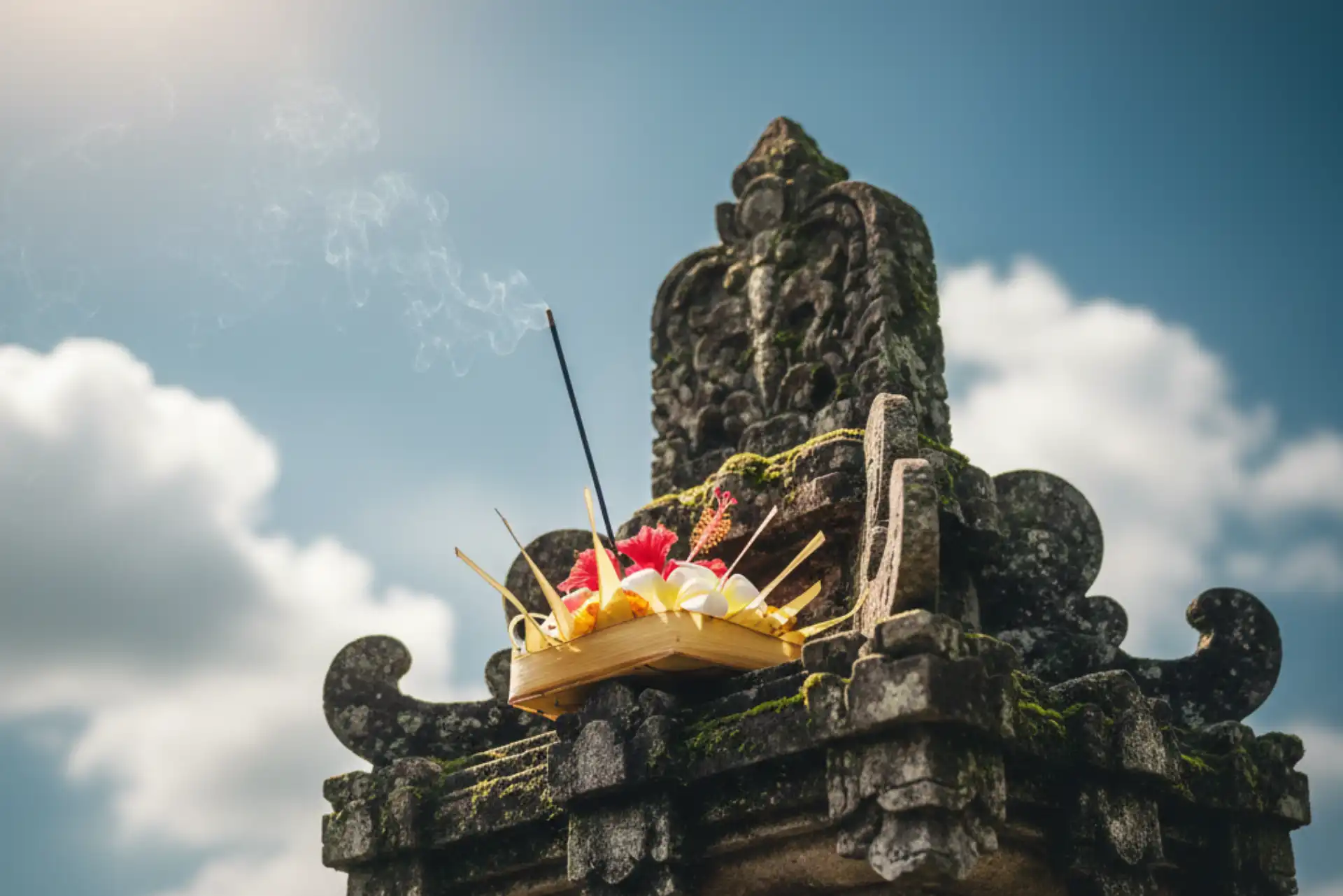
Offerings placed on shrines, altars, and elevated spaces are presented as a form of reverence to higher spiritual forces. Elevation symbolises honour.
These offerings are commonly seen:
• in temples
• at family shrines
• at sacred corners within compounds
When visitors see offerings placed higher, they are often witnessing an act more directly connected to prayer.
Why are some offerings placed on the ground?
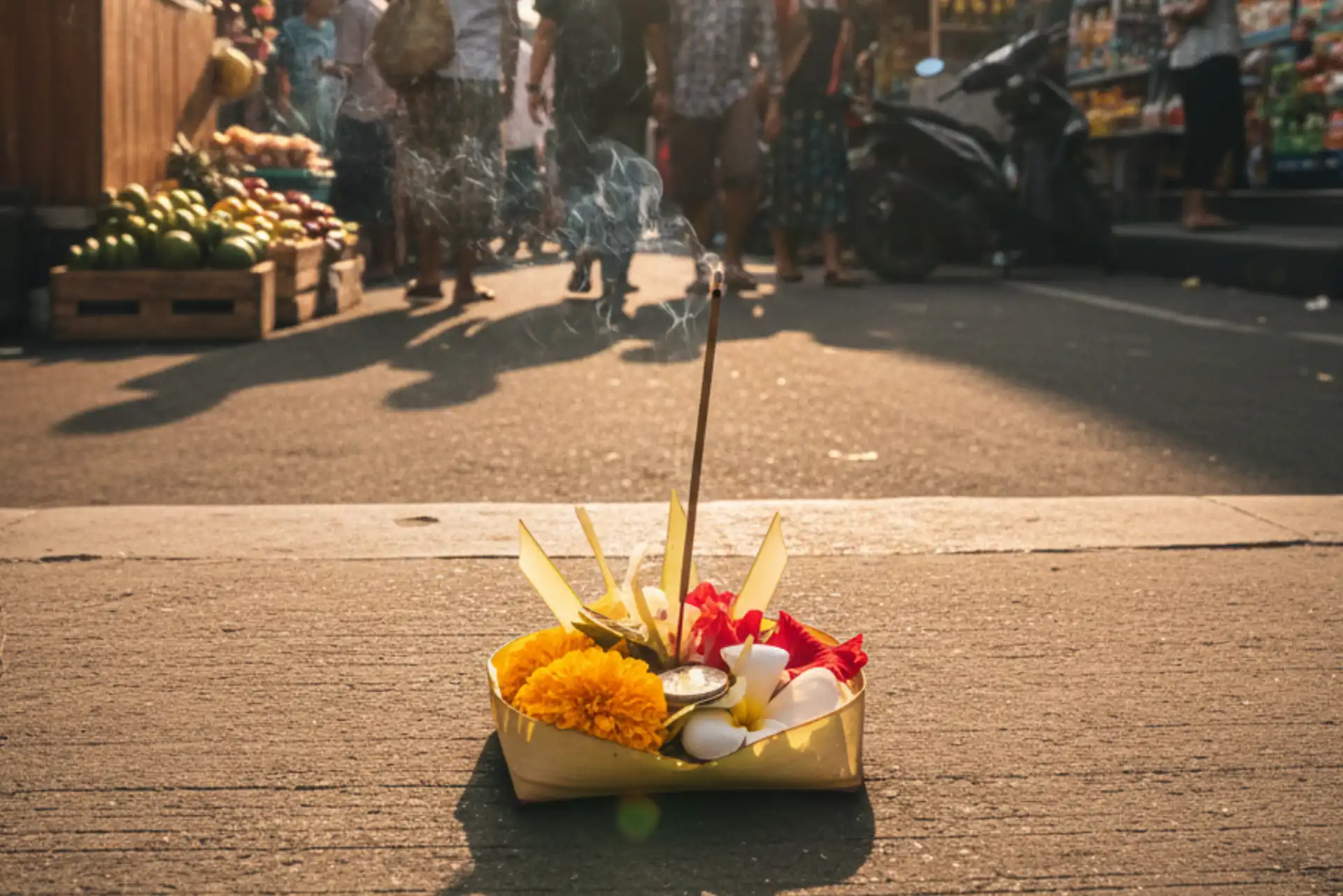
This is one of the most misunderstood parts. In Bali, spiritual life is not only “above.” Certain locations on the ground are deeply meaningful: thresholds, crossroads, entrances, and boundaries. These are spaces where energies are believed to pass.
Offerings placed low are often intended to maintain balance and protection at these transitional points. Many Balinese believe that life must remain in harmony with both constructive and disruptive forces, and that offerings help maintain that balance.
So when you see a Canang Sari placed on the ground, it is not casual or disposable. It is purposeful.
Why is incense sometimes present, sometimes not

Incense (dupa) is often used to accompany prayer. Its smoke symbolises the rise of intention, devotion, and spiritual communication. It is also used to cleanse the space and mark the offering as a sacred act.
But incense may not always be present because:
• The offering may be placed first and lit later
• Wind or rain may prevent lighting in open spaces
• The offering may be simpler, daily, and practical
• Incense may have already burned down
An offering without incense is not “less meaningful.” It may simply be part of a different moment in the ritual.
It is also a reminder of humility
There is something deeply consistent about Canang Sari. It is repeated daily, often before work begins. Many Balinese women prepare offerings with care regardless of mood, busyness, or weather.
This repetition is part of the belief: the world does not stay in balance on its own. Balance is maintained through regular, humble acts.
In a modern world that often celebrates visibility, Canang Sari reflects a different value: devotion without performance.
A gentle note for visitors
It is natural to want to photograph Bali. But Canang Sari is not staged for attention.
It is part of a living faith.
Visitors are welcome to observe respectfully:
• Step around offerings when possible
• Avoid touching or moving them
• Photograph discreetly, without turning the offering into a prop
Bali is generous in what it shares. Respect is how that generosity remains protected.
Bali, in one small offering
Canang Sari appears everywhere because Balinese culture is not reserved for temples alone. In Bali, the sacred lives beside the everyday.
For travellers, understanding this changes everything. What once looked like decoration becomes something far more meaningful: a daily act of gratitude, balance, and devotion, offered quietly, and faithfully, every single day.