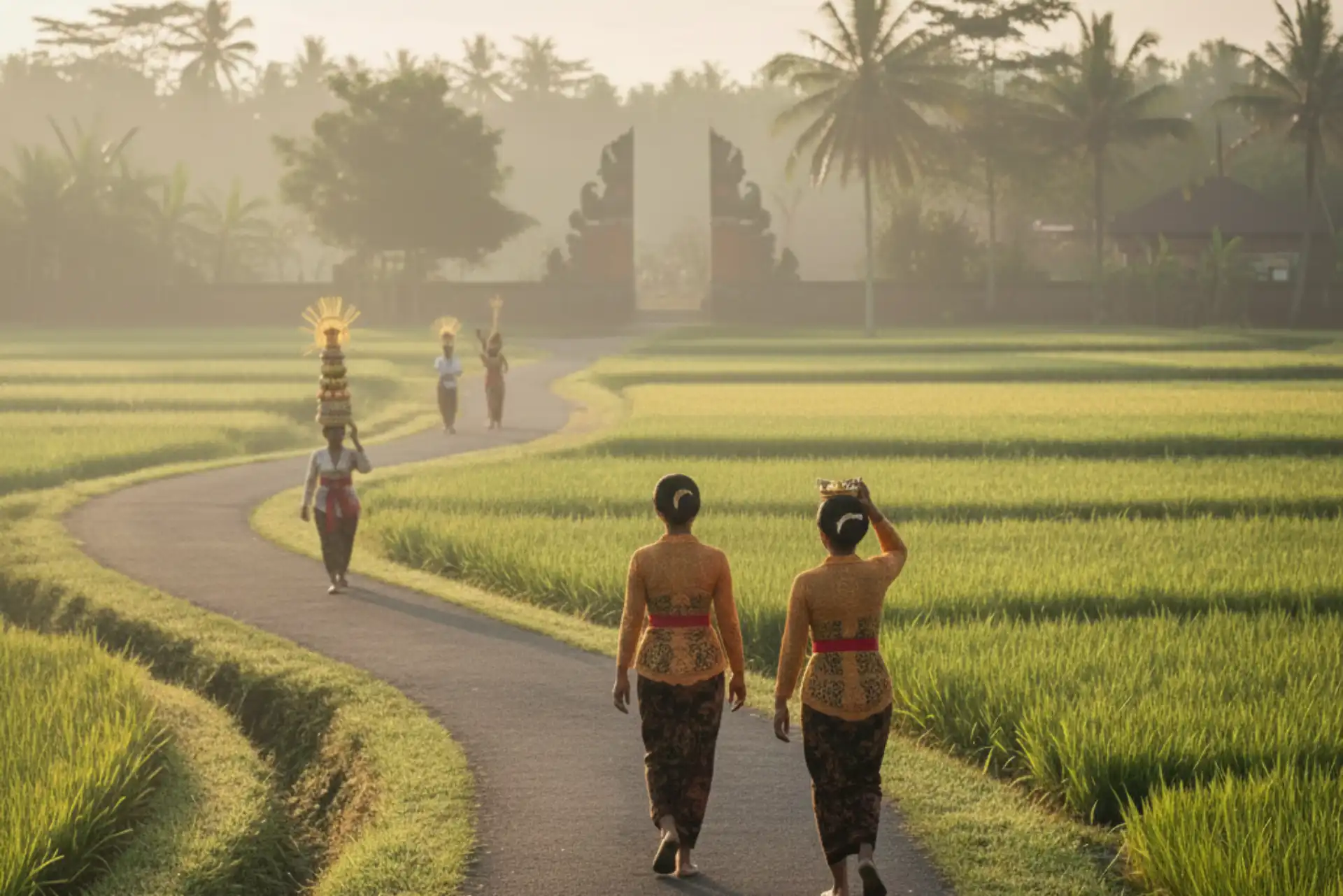
The Meaning Woven in Cloth: Understanding Balinese Attire
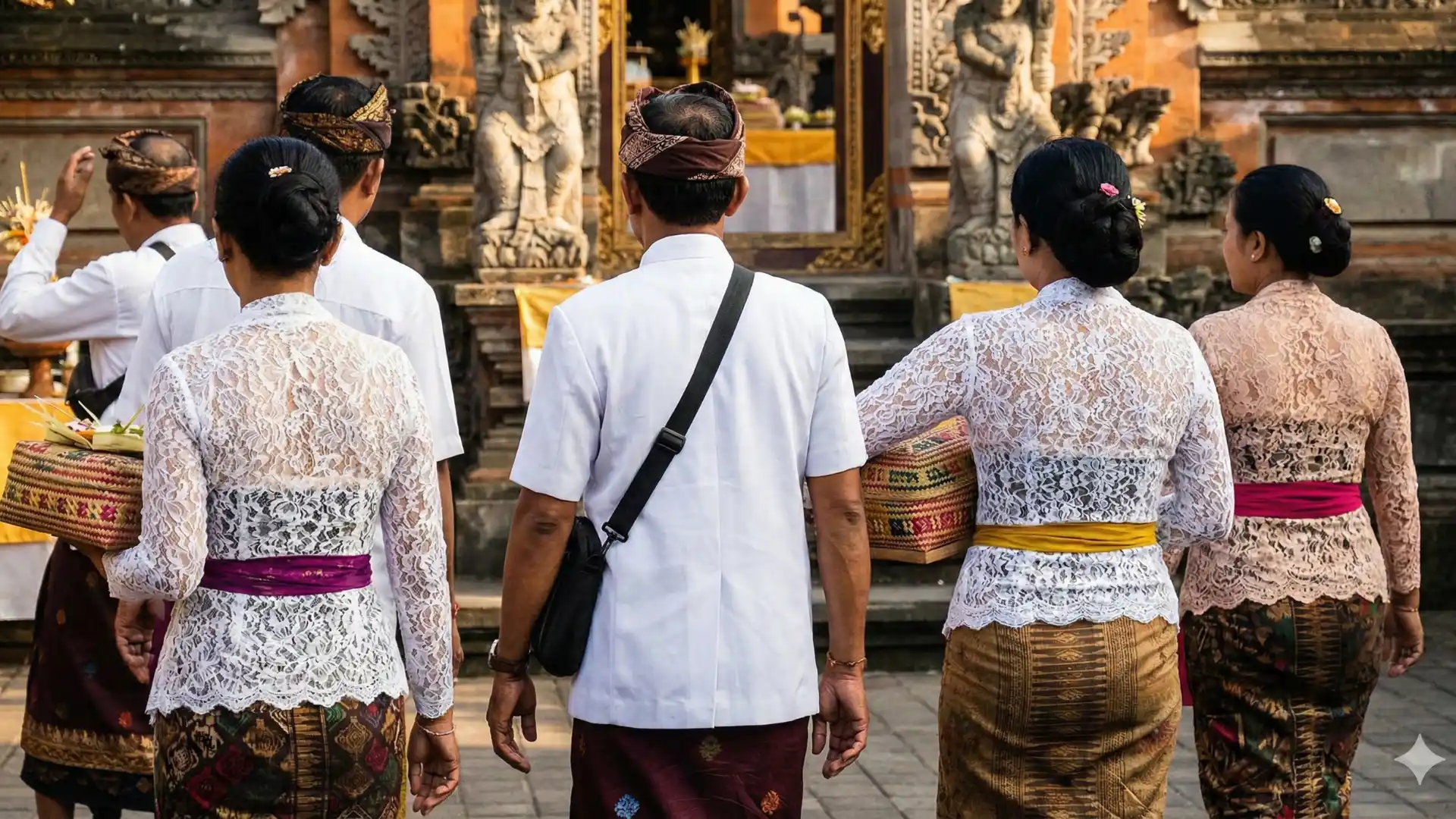
Understanding the Cultural Significance of Balinese Attire
Traditional Balinese attire is more than fabric — it is a living expression of harmony, respect, and spiritual balance. Each garment, from the kamen to the udeng, carries meaningful symbolism rooted in Tri Hita Karana, the philosophy that guides life in Bali. Colours convey purity, energy, and protection, while folds and knots represent intention and devotion.
In Bali, what one wears is not a mere expression of style — it is a reflection of harmony, respect, and belonging. Traditional Balinese attire, worn during temple visits, ceremonies, and offerings, is a language of its own — one that conveys purity of thought and balance between the physical and spiritual worlds.
The Philosophy of Balance and Respect
Balinese dress codes are rooted in the principle of Tri Hita Karana — the harmony between the divine, humanity, and nature. To appear properly dressed during a ritual or temple visit is to honour that balance. Each piece of clothing represents respect: for the gods, for others, and for oneself.
The Key Elements of Balinese Attire
1. Kamen (Sarong)
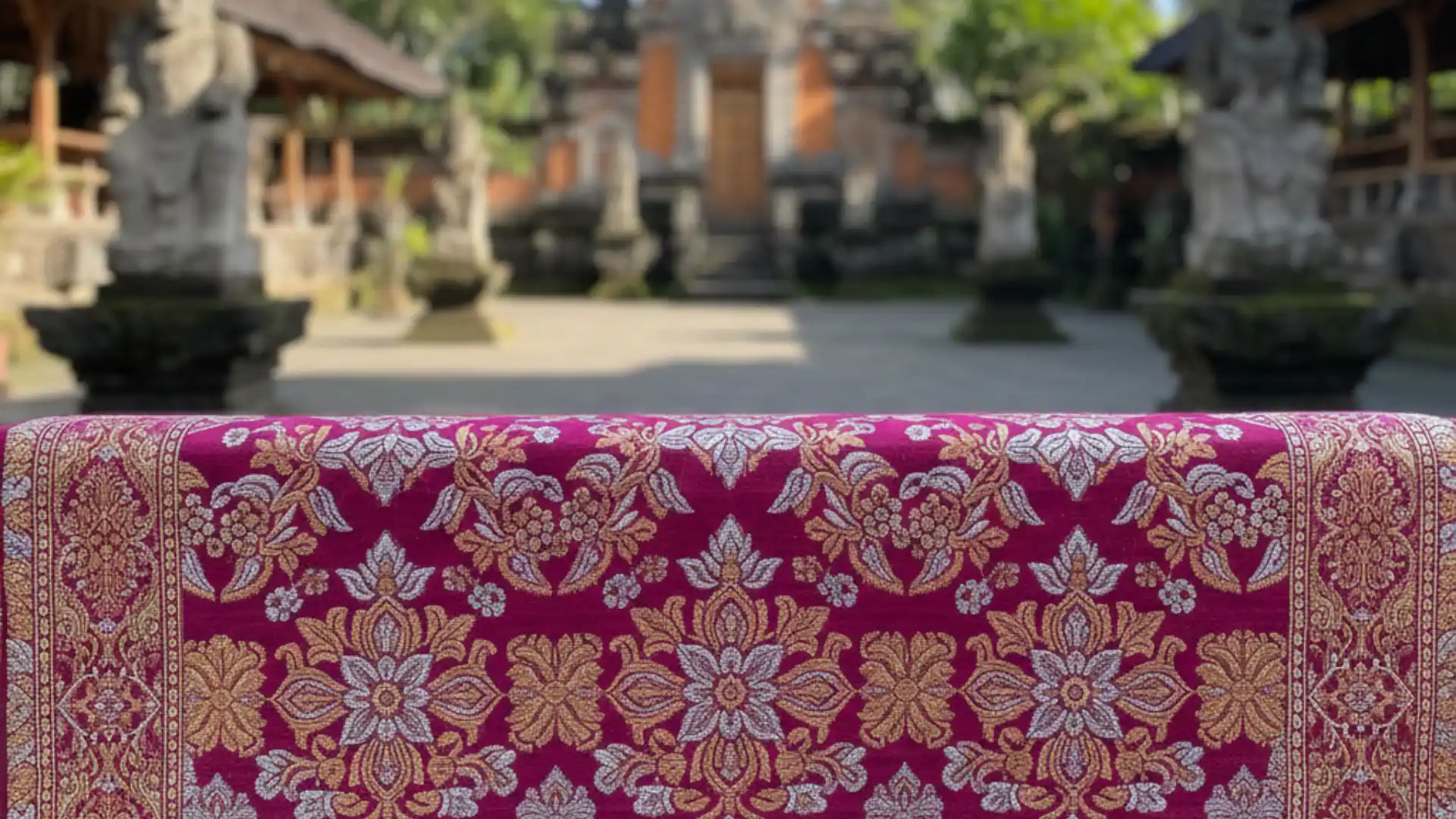
The kamen is a long piece of cloth wrapped around the waist, worn by both men and women.
For men, it is tied with a sharp fold in front, symbolising discipline and focus.
For women, it drapes more fluidly, reflecting grace and nurturing energy.
Patterns often indicate origin, family, or occasion — from simple checks for daily prayers to gold-threaded songket for temple ceremonies.
2. Selendang (Sash)
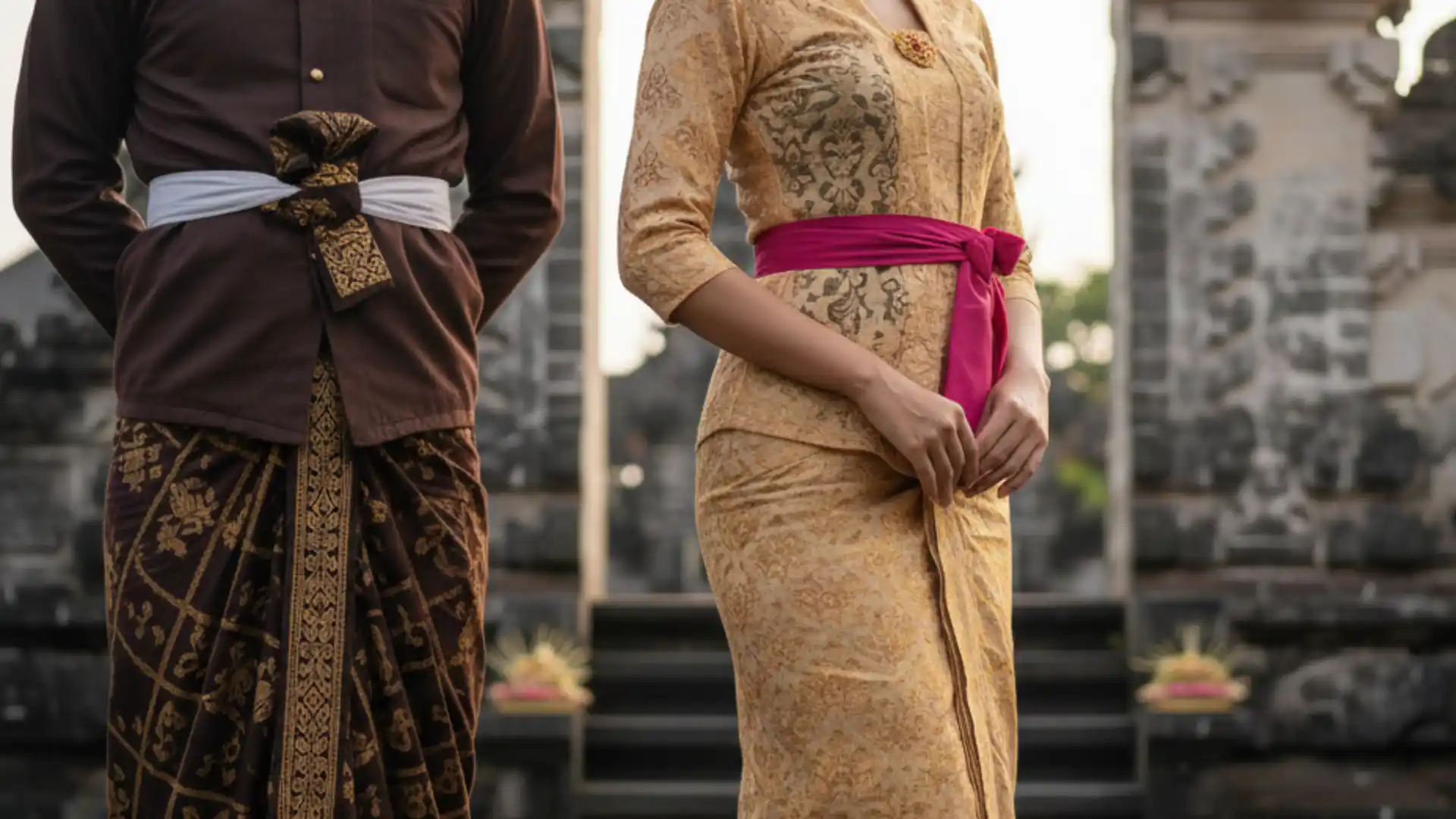
The selendang, or sash, is tied around the waist to secure the kamen. Yet its meaning goes beyond form — it symbolises self-control and unity between body and spirit. During prayers, the sash serves as a gentle reminder to remain centred in devotion.
3. Kebaya
The kebaya, worn by women, embodies both modesty and elegance. Traditionally made of lace or fine cotton, its structure reflects discipline and poise. The white kebaya is most often worn to the temple, symbolising purity and sincerity of intention.
4. Udeng (Headcloth)
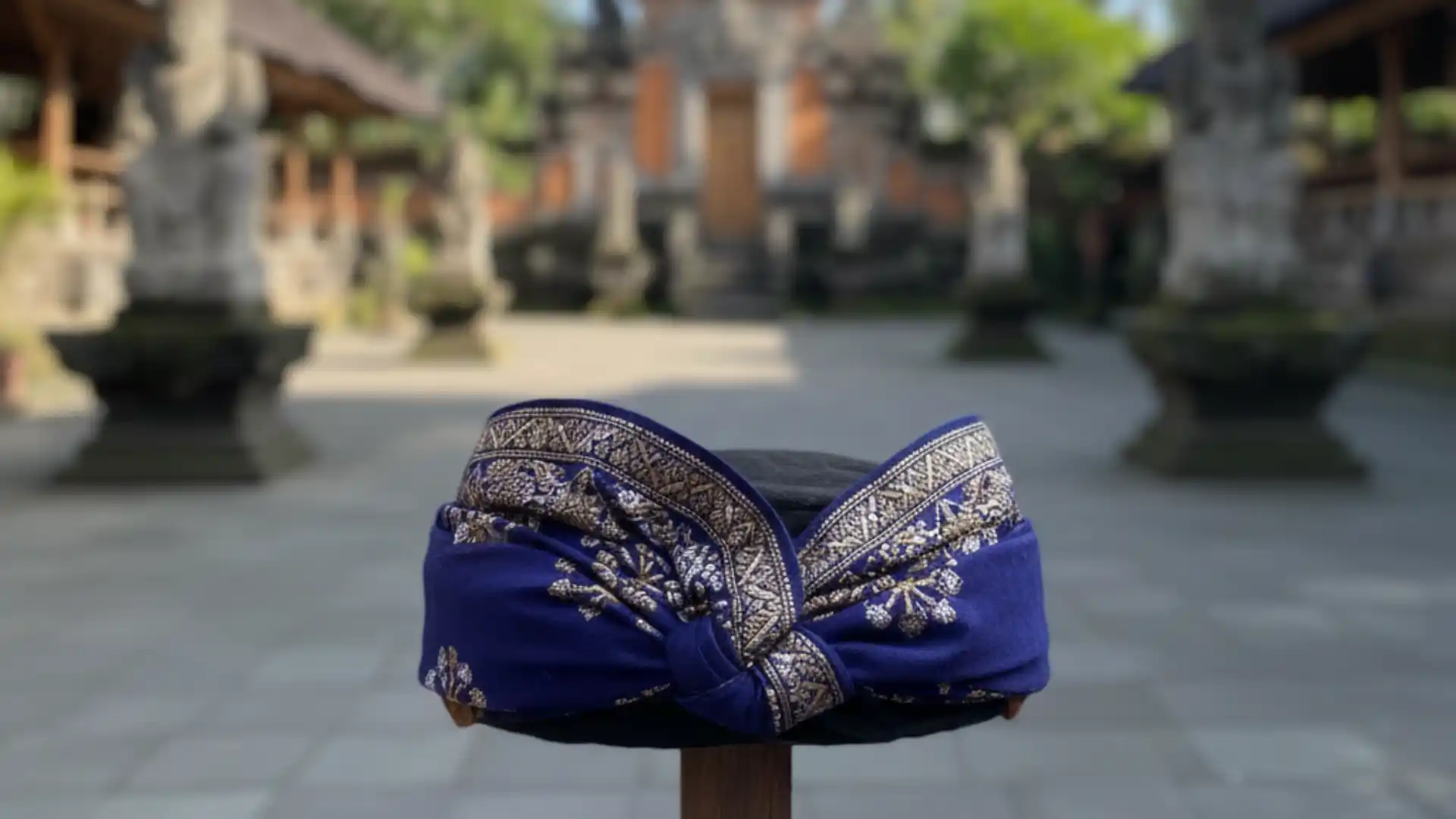
The udeng, worn by men, is folded and knotted at the forehead — the knot pointing upward to signify clarity of mind and connection to the divine. The design and fold vary across Bali, with white udeng used for temple visits and patterned ones reserved for festive occasions.
5. Saput
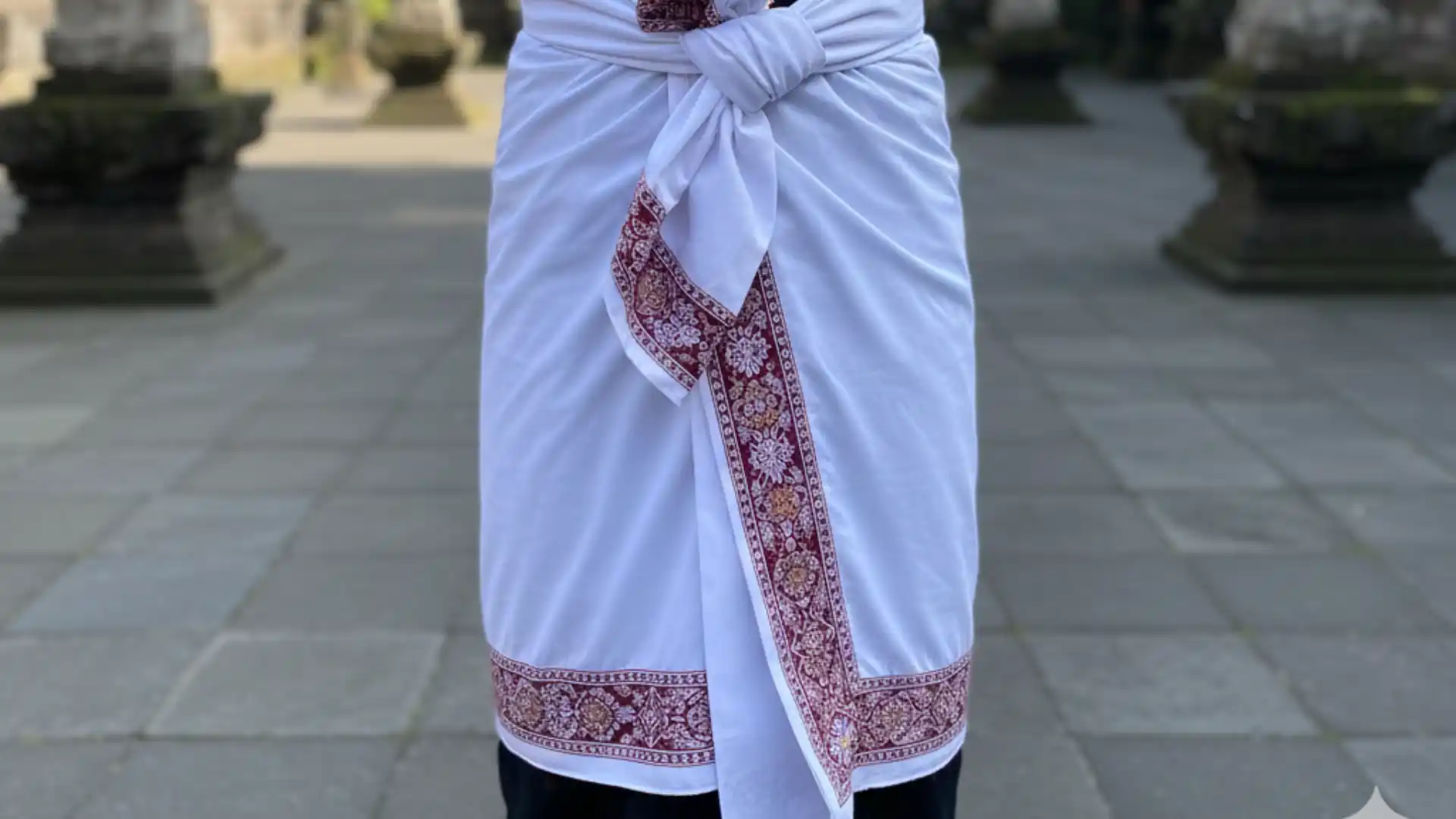
During formal ceremonies, men add a second layer called the saput over the kamen. This layer represents protection and dignity, a reflection of readiness and balance between the inner and outer self.
Colours with Purpose
Each colour in Balinese attire carries deep spiritual symbolism:
• White for purity and sincerity
• Yellow for wisdom and sanctity
• Black for power and protection
• Red for energy and passion
These hues are not chosen for decoration alone — they express one’s place within the cycle of life, ceremony, and devotion.
Attire as an Offering
To the Balinese, dressing appropriately for prayer is an offering in itself. The act of folding, wrapping, and arranging each garment mirrors mindfulness — a visual form of gratitude and reverence. It is where spirituality and artistry intertwine.
A Tradition That Endures
Even as time brings new fabrics and influences, the essence of Balinese attire remains unchanged: to wear with respect, to move with awareness, and to live in harmony. Each layer, colour, and knot tells a story of belonging — not just to Bali, but to a greater balance between the seen and unseen worlds.
Dress Like Royalty at Mulia Bali
Guests at Mulia Bali can experience this timeless heritage through the resort’s Balinese attire experience, where traditional fabrics, ceremonial accessories, and gentle guidance from local attendants allow you to dress like Balinese royalty. Whether for a temple visit, melukat purification, or cultural photography within the resort’s serene gardens, the experience honours authenticity and grace — a reflection of Bali’s living tradition, reimagined with Mulia’s signature elegance.